- By Admin User
- 15 May 2026
- No Comments
NOGAMU and UGOCERT Conduct an Organic Certification Session at the Stanbic Incubation Project.
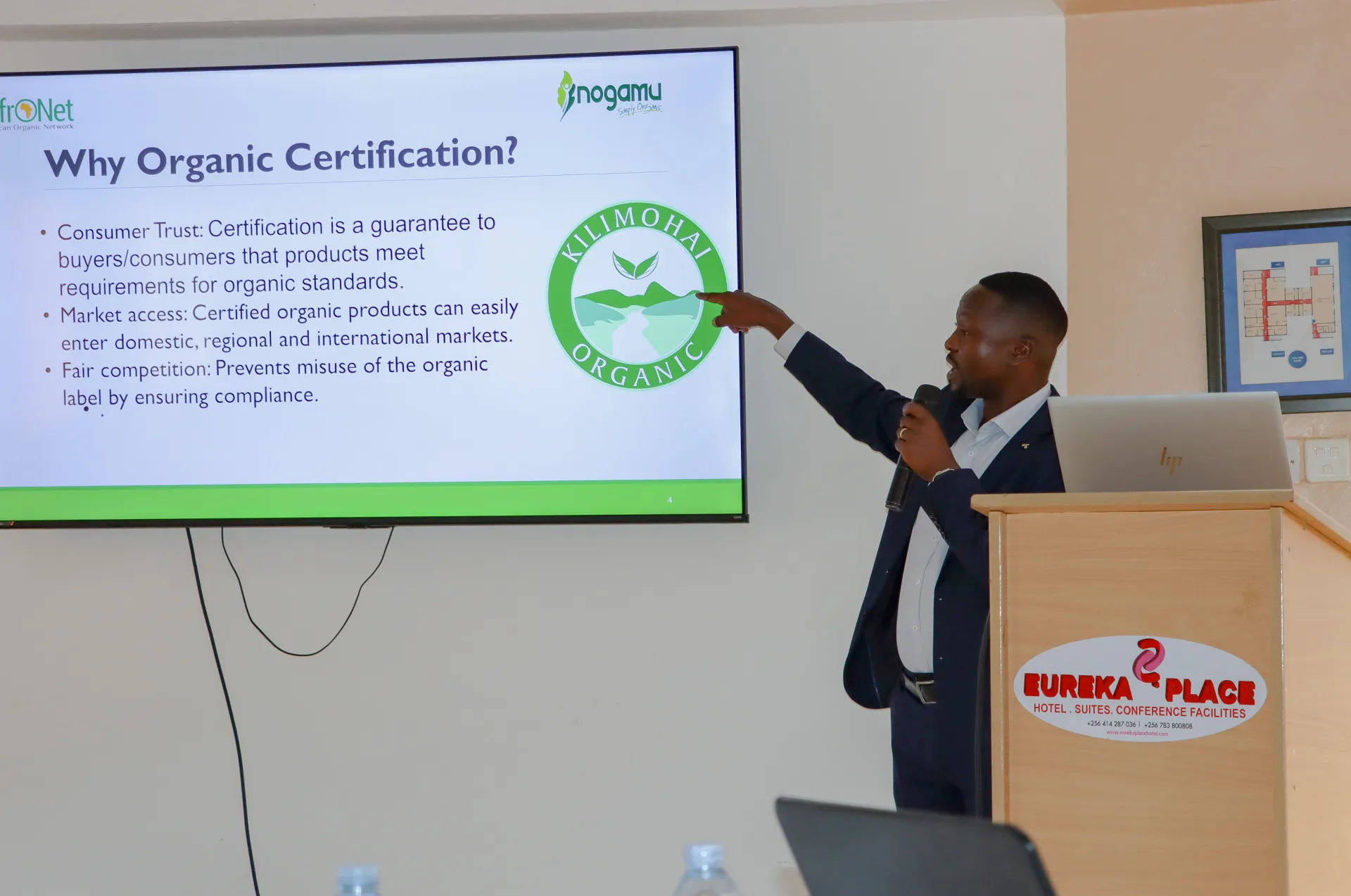
Entrepreneurs participating in the incubation project by Stanbic Bank Uganda on February 23rd 2026, received comprehensive training on organic certification during a dedicated session facilitated by; the Chief Executive Officers of the National Organic Agricultural Movement of Uganda (NOGAMU) Mr. Chariton Namuwoza and Uganda Organic Certification Company (UGOCERT) Ms Amina Nampomba.
The engagement brought together smallholder farmers at different stages of growth from all four cohorts who were developing innovations in soil health, mechanized agriculture and crop breeding. Mentors and pioneers were also part. However, discussions during the session revealed varying levels of understanding of certification, particularly regarding costs, timelines and compliance requirements. So, this session guided the farmers on certification processes, standards, costs, market access for organic producers and the role NOGAMU plays in these areas.
During the training, Mr. Chariton highlighted NOGAMU as the leading advocate for the organic industry in Uganda for the past 25 years. The Organisation was established in response to the growing demand for organic products particularly within the European Union, which remains Uganda's largest export market. He emphasized that NOGAMU's primary role in certification is to prepare farmers and agribusinesses for certification by enhancing their capacities and guiding them through the necessary standards and compliance processes. This support ensures that by the time clients are presented for inspection, all requirements have been adequately addressed.
Additionally, Mr. Namuwoza noted NOGAMU's collaboration with institutions such as NARO in areas of research, training and extension services. He also pointed out the organization's advocacy efforts that contributed to the approval of the National Organic Agricultural Policy in 2019.
Participants were guided through the process of organic certification, what it meant and its importance. This process helps to build consumer trust and serves as a marketing tool, enhancing the credibility and confidence of producers in the marketplace. Emphasis was placed on the strict adherence to standards based on the principles of health, ecology, fairness and care with zero tolerance for synthetic chemicals throughout production, transportation, processing and storage. Proper separation of organic products at every stage was highlighted as critical to maintaining their organic status. In this context, Madam Florence, a participant from cohort Four, shared her experience after recently obtaining certification for an organic pesticide product through NOGAMU and UGOCERT. She described certification as a significant achievement that enables producers to confidently access the market. She emphasized that research, testing and thorough documentation were critical in attaining certification and explained that her product is environmentally friendly, non-toxic to humans and effective against a broad spectrum of pests.
During the session, farmers were taught about the certification process which starts with submitting an application to a recognized certification authority, followed by an inspection or audit to confirm compliance. Any non-compliances that are found need to be resolved before certification can be issued and the certification must be renewed each year to guarantee ongoing adherence to the standards. The session also covered various certification systems, including the third-party certification necessary for international markets, which is carried out by accredited organizations like UGOCERT and Participatory Guarantee Systems, which offers a more affordable option suitable for local markets. Participants were also introduced to the Kilimohai mark issued by UGOCERT as a symbol of certified organic status.
Challenges discussed included the high costs of certification and extensive documentation requirements. While international accreditation fees are determined by global bodies, entrepreneurs were encouraged to explore group certification as a strategy for sharing costs. It was also noted that NOGAMU has an open Memorandum of Understanding with UNBS, enabling streamlined processes that may allow businesses to attain both organic and UNBS certification where applicable.
Ms. Amina Nampomba Ngobi CEO of UGOCERT, emphasized the organization’s role as a reliable partner for exporters, producer groups and agribusinesses. She detailed the various services offered by UGOCERT, which include certification, capacity building and training focused on organic standards, safety, and policy management systems. Additionally, UGOCERT provides market intelligence and facilitates linkages within the industry. Ms. Amina also highlighted the important difference between "organic" and "certified organic," noting that certification offers verified assurance to consumers regarding the authenticity of organic products.
The session wrapped up with a powerful message urging entrepreneurs to take advantage of the growing local and global interest in organic products. Attendees were encouraged to connect with UGOCERT and NOGAMU to investigate options for membership, skill development and certification assistance as they grow their businesses. In addition, entrepreneurs were invited to contact these organizations for any inquiries or help related to the organic sector and the certification processes involved.