- By Admin User
- 15 May 2026
- No Comments
Empowered by Knowledge: How NOGAMU trainings transformed Kyegegwa Farmers
"It’s because of NOGAMU that we are here today," says Michael Twinamatsiko, secretary of Kiryaboma Farmers Savings and Credit Group. In the quiet village of Kiryabyomero C1, Ihunga Parish, Kyegegwa District, a group of dedicated farmers has transformed challenges into opportunities through the production of organic liquid fertilizers, thereby improving both their own livelihoods and those of their community.
Established in 2018, the main objective of the group is to facilitate farmers in pooling their resources for the purposes of saving, lending and investing in agriculture. Besides providing financial assistance, it promotes idea-sharing and collaborative efforts among its members, which complements government support initiatives designed for youth and farmers to work together. At present, the group consists of ninety members spread over three clusters. Initially, their focus was on traditional farming crops like maize, beans and coffee with the use of chemical fertilizers that negatively impacted both soil health and human well-being.
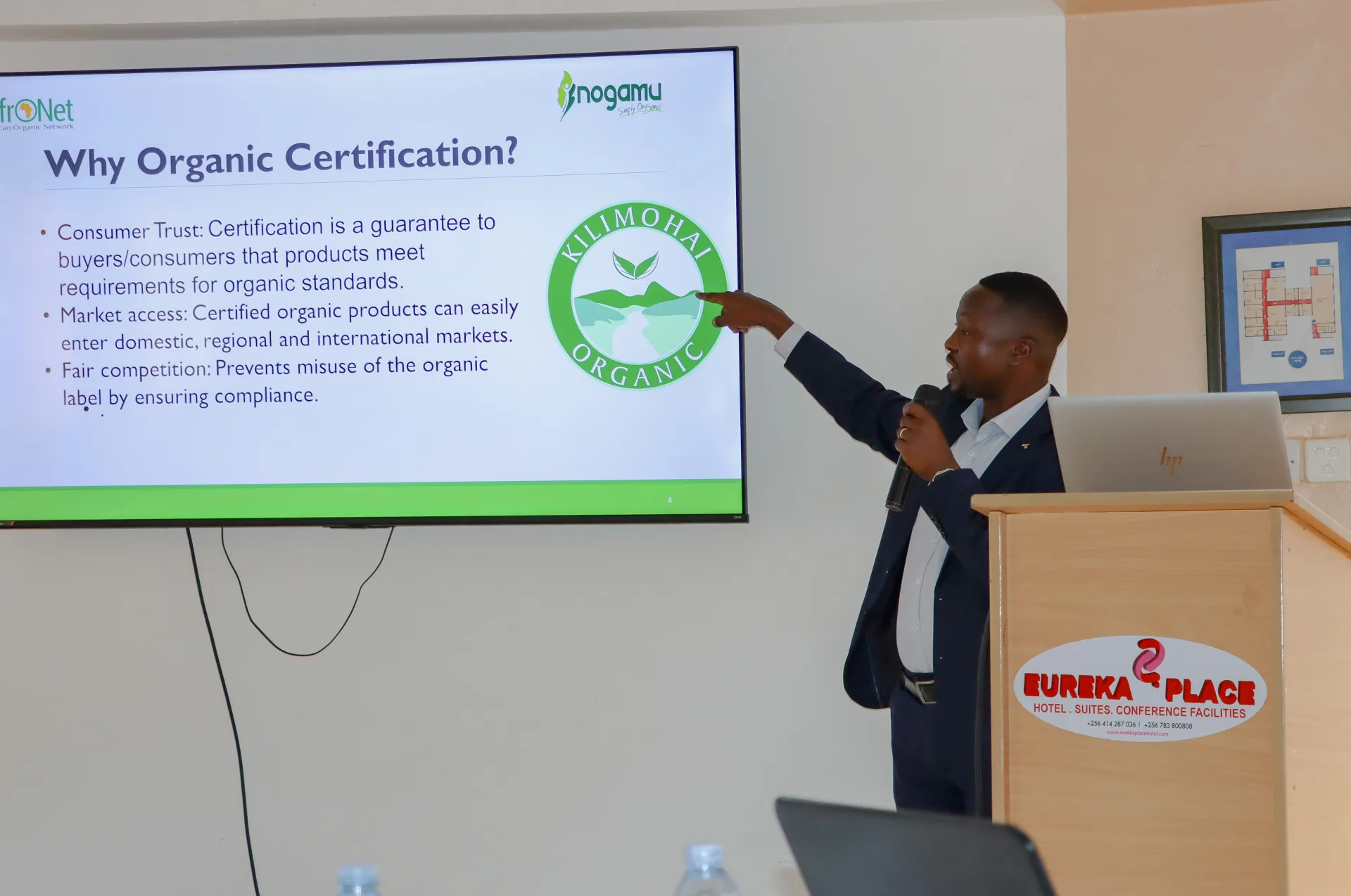
On May 26, 2025, a significant shift occurred when members attended a training organized by the National Organic Agricultural Movement of Uganda (NOGAMU) in Kyenjojo District. They learned about organic farming, high-demand crops, value addition and the risks of chemical inputs like 24D and Weed Master, which inspired them to switch to organic fertilizers as they already had some of the requirements to start. This was their first engagement with NOGAMU, following their partnership with CARE in 2018 on projects like She Feed the World and Soul Family, leading to the training invitation.
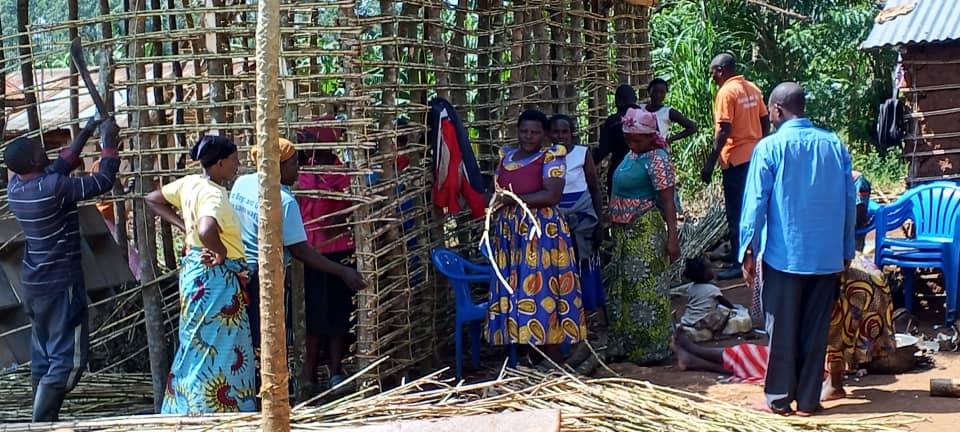
Just weeks later, on June 16th 2025, twenty-six committed members, including eighteen women, eight men and nine youths, contributed money and sourced materials and began producing organic liquid fertilizers using locally available materials such as animal waste, ash, ant-hill soil, limestone, Sukari guru, baking powder for cooking, stone salt, murras, milk and other natural additives. Though initially only a portion of the group adopted the practice.
Since then, the project has continued to grow steadily. The farmers are now in their third production season and have improved both the quality and quantity of their organic liquid fertilizers. Over 180 farmers from different areas are currently using the fertilizers. Many of these farmers have also received training in organic production techniques.
The growth of the initiative has created new opportunities. Participation in the 10th Harvest Money Expo was made possible through the RIPO Effect and support from the World Food Programme, which identifies youth and promising projects for exposure. Michael represented the group with fifteen 5-liter jerrycans and six large jerrycans of organic liquid fertilizer. "I sold nearly everything. I came back with only three jerrycans and returned with 375,000 shillings which benefits the group a lot. It was amazing to see people showing interest in our fertilizer and asking for contact information to purchase it in Kampala.
Some even inquired about organic pesticides." I felt so happy because our organic liquid fertilizer, coming from Kyegegwa, and being sold in Kampala at Kololo meant a lot to me," he shares. This demonstrated that Ugandans are embracing organic solutions and has opened doors to broader markets.
The benefits are evident, highlighted by visits from distinguished guests such as the Chief Development Officer and government officials like the Chairman of LC 3, along with inquiries from various organizations regarding our practices. Members gain opportunities to secure employment, generate income and develop skills, while women, youth and children within the group are now actively participating in productive endeavors.
The shift to organic farming has improved their health, granted them financial autonomy and allowed some members to acquire land.
Our fertilizers are priced at UGX 5,000 per liter, UGX 25,000 for 5 liters and UGX 100,000 for 20 liters.
Despite some successes, the group still faces some challenges. People from places like Kyegegwa need large quantities of fertilizers, but they lack transportation. Additionally, products from Fort Portal are costly and local suppliers of animal feeds have increased their prices after discovering the success of the group. Other issues include transportation difficulties, high raw material costs and labor-intensive processes like hand-grinding limestone. However, some of them have been addressed by working together, pooling resources and forming partnerships.
Looking ahead, the group plans to expand production, acquire training, introduce more organic products and grow their market internationally. They have built a sustainable production facility and shop on a piece of land they acquired. Michael expresses his gratitude to NOGAMU for the training they provided, as everything the group has achieved is a result of that training. He concludes by stating, "NOGAMU is the reason we have reached this level."